

Dual Control Vehicle Driving Lessons Explained
Uncategorized | 28 August, 2026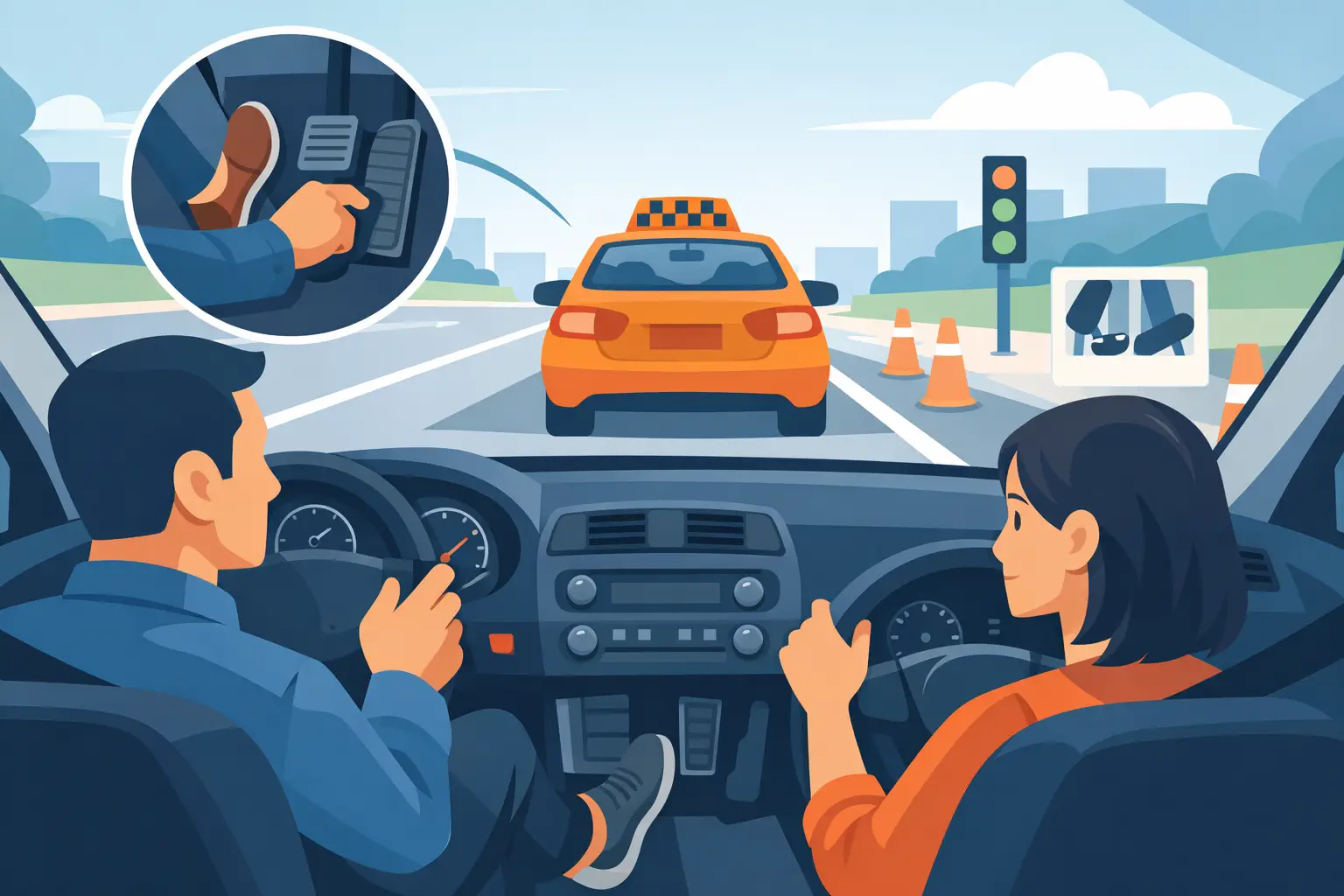
A missed brake point, a busy roundabout, or an unexpected pedestrian can make a new driver freeze for a second. In dual control vehicle driving lessons, that second does not have to turn into a frightening experience. Your instructor has an extra brake pedal and can step in when needed, giving you the room to learn safely while you remain in control of the driving task.
For learner drivers in Melbourne’s eastern suburbs, this is more than an added vehicle feature. It is a practical safety net that supports calm decision-making, better habits, and genuine confidence before you drive independently or take your VicRoads license test.
What makes a dual-control lesson different?
A dual-control car has a second set of key pedals on the instructor’s side, usually an accelerator and brake. The learner drives from the normal driver’s seat, while the instructor can brake or assist if a situation becomes unsafe. This is particularly helpful in the early stages of driving, when judging gaps, controlling speed, and reacting to changing traffic can feel like a lot to manage at once.
The extra controls are not there for the instructor to take over every time you make a small mistake. Good instruction still puts you at the center of the lesson. Your instructor explains what to look for, gives you time to respond, and uses the dual controls only when safety requires it. Over time, you should need that safety backup less and less.
For nervous learners, this setup can make the first few lessons feel far more manageable. You can practice stopping smoothly, turning at intersections, changing lanes, and entering traffic with a qualified instructor beside you. Instead of avoiding the situations that worry you, you can work through them at a pace that suits your experience.
Why the vehicle matters for safer learning
A driving lesson should teach safe habits, but the car itself should also help protect you while those habits are still developing. At Green Signals Driving School, lessons take place in modern automatic dual-control vehicles with a five-star ANCAP safety rating. Features such as seven airbags, electronic stability control, ABS, traction control, emergency brake assist, and lane support add meaningful protection during real-world practice.
These features do not replace careful driving. A learner still needs to check mirrors, scan ahead, maintain a safe following distance, and make sound decisions. But they can provide helpful support when road conditions change quickly or when a learner is still building coordination.
Automatic vehicles also let many beginners focus on the road rather than clutch control and gear changes. That can be a sensible choice if your goal is to become a safe, confident automatic driver and prepare for an automatic license test. The trade-off is that an automatic license does not allow you to drive a manual vehicle without further testing, so it is worth considering the type of vehicle you expect to use after you are licensed.
Safety builds confidence, but practice builds judgment
Feeling safe in the car is an excellent start, but confidence should come from repeatable skills rather than simply feeling comfortable. Each lesson should gradually help you recognize hazards earlier, choose safe speeds, and understand why a particular decision is needed.
For example, braking is not only about stopping at a red light. It is about noticing that traffic ahead is slowing, checking what is behind you, easing off the accelerator early, and braking smoothly enough to stay in control. Dual controls protect the learning process, while clear coaching turns that experience into judgment you can use on your own.
What you can practice in dual control vehicle driving lessons
The right lesson plan depends on your starting point. A first-time learner may begin in quieter streets around Ringwood, Blackburn, Nunawading, or Vermont, where there is space to practice steering, positioning, turns, and controlled stops. As your skills grow, lessons can include busier roads, multilane traffic, roundabouts, parking, and the routes and conditions you may encounter near a VicRoads test location.
A well-structured lesson often starts with a quick conversation about what you practiced last time and what feels challenging now. Your instructor can then set one or two clear goals for the drive. This might be smoother left turns, safer gap selection at roundabouts, or more consistent mirror checks before changing lanes.
As you improve, practical sessions can cover:
- residential streets, school zones, and changing speed limits
- intersections, roundabouts, lane changes, and merging
- reverse parallel parking, three-point turns, and curbside parking
- hazard awareness, defensive driving, and test-style route practice
The goal is not to memorize a route. VicRoads assessors can test your ability to drive safely in changing conditions, so you need to understand the road rules and apply them consistently. Route familiarity can reduce surprises, especially around Box Hill, Mitcham, Glen Waverley, or Heatherton, but sound observation and safe choices matter more than knowing every turn.
A lesson plan should match your experience
There is no single number of lessons that suits everyone. A learner who has never driven before usually benefits from five to ten lessons, combined with supervised practice between sessions where possible. This gives enough time to establish the basics before moving into more complex traffic situations.
If you already drive reasonably well and need help before your test, three to five focused lessons may be enough. Your instructor can identify the small habits that often affect test results, such as incomplete head checks, late braking, unclear lane positioning, or hesitation when it is safe to proceed.
International drivers converting an overseas license often need a different kind of support. You may be confident behind the wheel but unfamiliar with Victorian road rules, hook turns, tram-related awareness, school-zone requirements, or local test expectations. A few targeted lessons can help you adapt without treating you like a complete beginner.
It also helps to choose an instructor you can communicate with comfortably. Clear explanations reduce stress and make feedback easier to act on. For learners who prefer support in English, Hindi, or Gujarati, language options can make a real difference to understanding road rules and building confidence. Male and female instructor availability can also help you choose the learning environment that feels right for you.
How to make each lesson count
Come to each lesson ready to be honest about what feels difficult. If merging makes you anxious, say so. If you understand parking in theory but lose confidence when cars are waiting, tell your instructor. The most useful lessons are not the ones where everything goes perfectly. They are the ones where you safely repeat the skill that once made you uncomfortable.
Try to keep practicing between lessons with an eligible supervising driver, if that is available to you. Repetition helps turn instructor feedback into automatic habits. After a lesson, write down one thing you did well and one item to practice next time. Small, specific goals are easier to improve than a vague promise to “drive better.”
Before booking your license test, arrange a realistic assessment drive. This should include the skills you are likely to use under test pressure, not only your favorite roads. A patient instructor can give direct feedback on whether you are ready now or whether a little more practice would make the test experience safer and less stressful.
The calm way to prepare for independent driving
Passing your test on the first attempt is a worthwhile goal, but the bigger goal is being ready for the drive after the test. That means handling an unfamiliar intersection, a sudden change in traffic, or a rainy afternoon without relying on someone beside you to make the decision.
Dual-control lessons give learners a protected place to develop that independence one careful drive at a time. Start where you are, ask for the support you need, and let steady practice turn nerves into safe, capable driving.