
How to Check Blind Spots Before Every Turn
Uncategorized | 7 September, 2026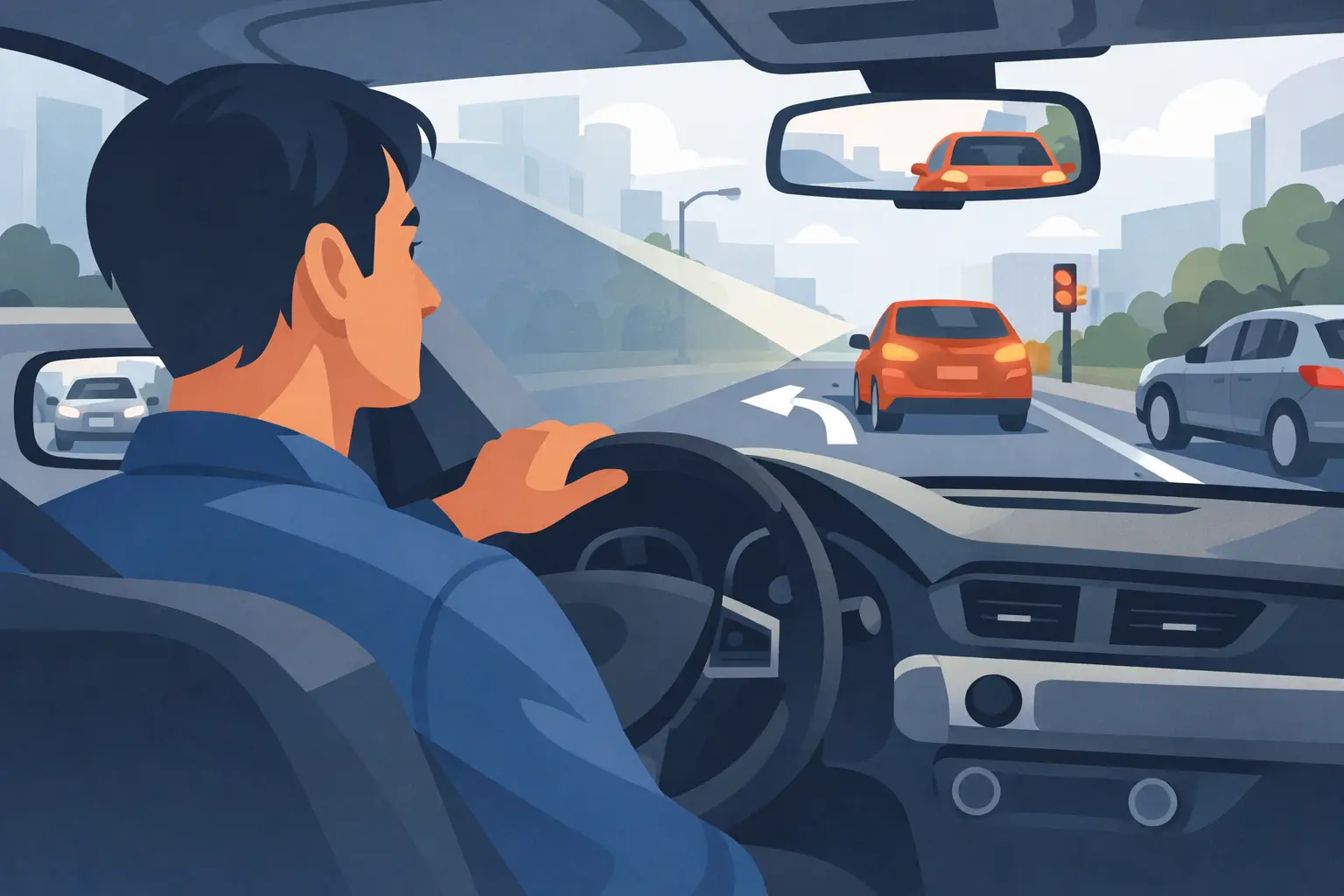
A rearview mirror and side mirrors give you a useful view of traffic, but they do not show everything beside your vehicle. Learning how to check blind spots is one of the small habits that makes a major difference to your safety, especially around cyclists, motorcyclists, pedestrians, and vehicles changing position quickly.
For learner drivers, the goal is not to make a rushed head movement because you know an instructor or tester expects it. A proper blind-spot check should become a calm, purposeful observation that helps you make a safer decision before the car moves sideways, turns, or pulls away.
What Is a Blind Spot?
A blind spot is an area around your vehicle that cannot be seen clearly in your mirrors. Even when your mirrors are adjusted well, another road user may be traveling beside your rear door, just behind your vehicle, or alongside the lane you plan to enter.
Cars, bicycles, motorcycles, and scooters can all be hidden in these areas. Smaller road users are particularly easy to miss, particularly in busy shopping areas, near schools, or when traffic is moving slowly through suburbs such as Ringwood, Box Hill, or Glen Waverley.
Your mirrors tell you what is behind and beside the vehicle. Your blind-spot check confirms whether there is anything in the space your mirrors cannot cover. You need both.
How to Check Blind Spots Correctly
A blind-spot check is a quick glance over the shoulder in the direction you intend to move. If you are moving left, check over your left shoulder. If you are moving right, check over your right shoulder.
Keep your hands steady on the wheel and look briefly. You are not turning your whole body or staring for several seconds. A glance is enough to identify whether a vehicle, cyclist, or pedestrian is in danger of being affected by your next movement.
The best sequence is simple: check your mirrors, signal early, check the blind spot, then make your move only when it is safe. This sequence gives other road users warning while giving you a final view of the area beside your car.
Do not rely on a blind-spot warning light, camera, or parking sensor as a replacement for looking. Safety technology can be helpful, but it may not identify every cyclist, motorcycle, or fast-moving vehicle. Your observation is still essential.
Avoid Looking for Too Long
A common learner mistake is holding the blind-spot check for too long. Looking away from the road ahead for several seconds can create a new risk, especially in traffic or near an intersection.
Practice making the glance short and deliberate. You should return your eyes to the road ahead before you begin steering. With patient practice, the movement becomes natural without taking attention away from what is in front of you.
When You Need to Check Your Blind Spots
Blind-spot checks are needed whenever your vehicle could move into the path of another road user. The exact timing depends on the situation, but these are the most common moments:
- Before moving off from the curb or pulling away after parking
- Before changing lanes or merging into traffic
- Before turning left or right, where a cyclist or motorcycle may be alongside
- Before entering a roundabout or moving across lanes to position for an exit
- Before opening your door after parking
At first, this may sound like a lot to remember. It becomes easier when you connect the check to one question: “Could my vehicle move sideways into someone’s path?” If the answer is yes, check the relevant blind spot.
Blind Spots When Moving Off From the Curb
Before you pull away, look in the rearview mirror, check the relevant side mirror, signal if needed, and check the blind spot on the side you are moving toward. In Victoria, this is often called a head check, and it is an important part of safe moving-off procedure.
For example, if you are parked on the left side of the road and need to move into the traffic lane, you must check over your right shoulder before pulling out. A cyclist, motorcyclist, or car may be approaching from behind in the lane you are entering.
Take your time. If traffic is close, wait. Moving off safely matters more than finding the first possible gap.
Blind-Spot Checks Before Turning
Turning is one of the most important times to observe carefully. Before a left turn, check your left mirror and make a quick left blind-spot check after signaling. This helps you see a cyclist or scooter rider traveling near the curb who may otherwise be hidden from view.
Before a right turn, your right-side observation is also valuable, especially when positioning your vehicle or moving toward the center of the road. Check mirrors first, signal, confirm the blind spot is clear, and then position the car smoothly.
The timing matters. If you check too early, a cyclist or motorcycle can enter the area before you begin your turn. Make the final blind-spot check close to the point where you are changing position, while still leaving enough time to respond safely.
Changing Lanes Without Rushing
A lane change requires more than signaling and hoping another driver makes space. Start by checking your rearview mirror to understand the traffic behind you. Then check the side mirror on the side you plan to move toward, signal, and perform a quick shoulder check.
Only change lanes when there is a safe gap and you can move gradually. Do not force another driver to brake or swerve. If the gap closes, stay in your lane, cancel the signal if necessary, and wait for the next safe opportunity.
This is especially useful on multi-lane roads and near busy test routes. Learners sometimes feel pressured when a turn or exit is approaching. Missing a turn is safer than making a sudden lane change without a clear blind spot.
Blind Spots Around Cyclists and Motorcyclists
Cyclists and motorcyclists deserve extra attention because they can fit into spaces a car cannot. They may also move faster than expected, particularly when traffic is slow or stopped.
Before turning or moving toward the curb, use your mirror and shoulder check to look specifically for them. Give cyclists enough room and never cut across their path. If a cyclist is beside you, wait until they have passed or until you can make your turn without affecting them.
At traffic lights, do not assume the road is clear just because you were first to arrive. A cyclist may come alongside while you are waiting. Check again before moving or turning.
Prepare for Your Driving Test
During a Victorian driving test, assessors look for safe, timely observation. A clear head check shows that you are actively checking the area your mirrors cannot see. But the test is not about exaggerated movements. It is about making safe decisions consistently.
Practice blind-spot checks during regular driving lessons until they fit naturally into every move-off, lane change, and turn. Your instructor can help you notice if your checks are too early, too late, too long, or missing in situations where they are needed.
At Green Signals Driving School, lessons are designed to build these habits calmly in dual-control vehicles, so learners can gain confidence without feeling rushed. This can be particularly helpful for first-time drivers and overseas license holders learning Victorian road routines.
Make the Check a Safety Habit
The safest drivers do not treat blind-spot checks as a test requirement. They use them because roads change quickly and mirrors have limits. Begin each maneuver with a calm plan, give yourself time, and look where your vehicle is about to go.
A quick shoulder check may take less than a second, but it gives you the information needed to protect yourself and everyone sharing the road with you.