
How to Reverse Bay Park Safely and Confidently
Uncategorized | 27 September, 2026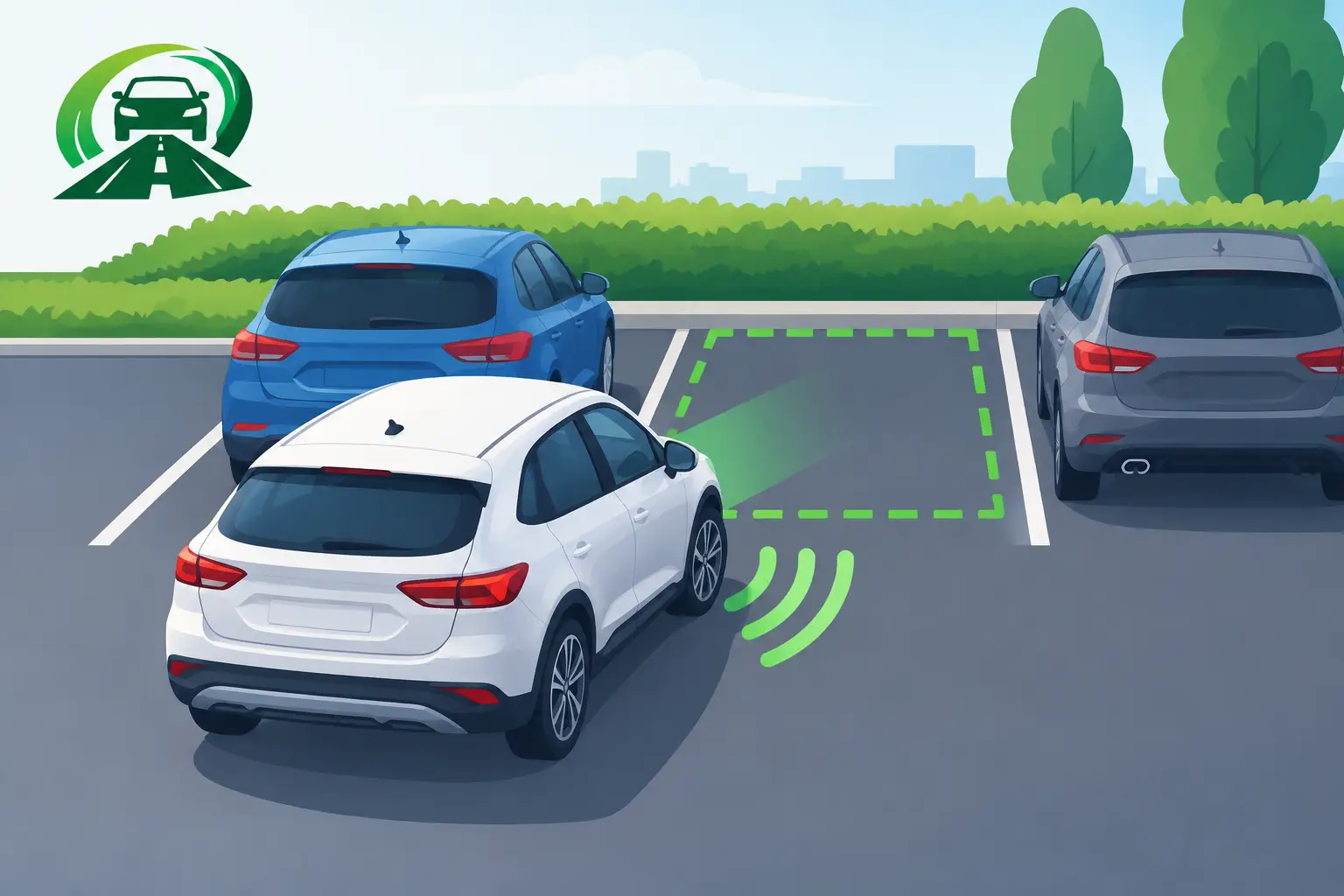
A reverse bay park can feel like a lot to manage at once. You need to judge space, steer while travelling backwards, watch for people and vehicles, and keep the car controlled. The good news is that learning how to reverse bay park is not about guessing. With a calm routine, slow speed and reference points that suit your car, it becomes a skill you can repeat with confidence.
For learner drivers preparing for a VicRoads test, the goal is not to make one perfect movement. It is to show safe observation, effective vehicle control and sensible decision-making. Taking an extra moment to check your surroundings is always better than rushing into a bay.
What makes a safe reverse bay park?
Reverse bay parking means positioning your vehicle in front of a parking space, then reversing into it so the front of the car faces out. Many drivers prefer this method because it gives them a clearer view when leaving the space. In a busy shopping centre or car park, that extra forward visibility can make a real difference.
A successful reverse bay park usually has four parts: choosing a suitable bay, setting up in the right position, reversing slowly with full observation, and finishing centred between the lines. Your steering matters, but your observation matters just as much. Cars, trolleys, pedestrians and children can appear quickly in car parks.
Remember that reference points are personal. The point at which you turn may look different depending on the vehicle, your seating position and your height. Use them as a guide, then practise until they feel reliable in the car you will drive for lessons or your test.
How to reverse bay park step by step
1. Choose a safe space and plan ahead
Approach the parking area slowly. Look for a bay that has enough room on both sides and is free from people, trolleys and obstructions. If another vehicle is waiting behind you, do not let that pressure rush your manoeuvre. You are allowed to take the time needed to park safely.
As you approach, scan the bay, the driving lane behind it and the spaces next to it. A quick glance is not enough. Car parks change constantly, especially near shops, schools and sporting centres.
2. Position your car beside the bay
Drive forward until your vehicle is roughly parallel with the bay you plan to enter. Leave adequate side space between your car and the parked vehicles or bays beside you. Being too close makes the turn tighter and increases the risk of clipping a line, kerb or neighbouring vehicle.
Your instructor can help you find a simple setup point, such as aligning a feature of your car with the first line of the bay. In a dual-control lesson vehicle, you can repeat the same setup safely until the position becomes familiar rather than stressful.
Before selecting reverse, stop completely. Keep the brake applied, select reverse, and prepare to move only when the area is clear.
3. Complete proper observation before reversing
This is the part many learners rush. Check your mirrors, look over both shoulders and turn your head to see through the rear window. You need to know what is happening around the whole vehicle, not only directly behind it.
Keep looking around throughout the manoeuvre. Mirrors support your view of the bay lines and nearby cars, but they cannot replace a direct check for pedestrians or approaching traffic. If someone walks behind your car, stop. Wait until they have moved clear, then check again before continuing.
Victorian road rules require you to give way when reversing. In practical terms, that means the person walking behind you has priority, even if you were already moving. A safe driver is prepared to pause.
4. Reverse slowly and begin your turn
Release the brake gently and let the vehicle creep backwards. In an automatic car, low-speed control is usually achieved by using the brake carefully rather than pressing the accelerator. Slow movement gives you time to observe, steer and correct early.
When your chosen reference point reaches the bay line, turn the steering wheel towards the space. Keep checking behind you and use your side mirrors to monitor both sides. Avoid staring at only one mirror. Looking between the rear window, mirrors and surrounding area helps you stay aware.
The exact amount of steering depends on your car and the size of the bay. Turn too early and you may cut across the first line. Turn too late and you may end up too close to the vehicle or line on the far side. This is why steady, slow practice is more valuable than trying to memorise one rule for every car park.
5. Straighten the wheels and centre the car
As the car moves into the bay, look for the vehicle becoming parallel with the lines. When you are close to straight, unwind the steering wheel so the front wheels return to a straight position. Continue reversing slowly until the whole vehicle is inside the bay without touching the rear boundary, a wall or another vehicle.
Stop with enough room to open the boot if needed and without allowing the front of your car to protrude into the driving lane. Check both mirrors. If you are clearly within the lines and centred reasonably, apply the brake, select park and secure the vehicle.
Do not keep making tiny adjustments just because the car is not perfectly centred. If it is safely within the bay and leaves practical room on both sides, that is usually a sound result. If you are too close to a line or parked car, however, drive forward carefully, reset and try again. A controlled correction shows good judgement.
Common reverse bay parking mistakes
The most common issue is reversing too quickly. Speed reduces your time to observe and makes every steering correction larger. Keep the car at walking pace or slower.
Another common mistake is relying only on the reversing camera. A camera is useful, but it is an aid, not a substitute for looking around. It can miss movement at the sides of the vehicle, and glare, rain or a dirty lens can affect what you see. During a test and in everyday driving, assessors want to see active observation.
Learners can also turn the wheel while the car is stationary for too long. This is called dry steering. It is better to make most steering movements while the car is creeping slowly, unless you need to stop immediately for safety.
Finally, do not panic if your first attempt is not centred. Stop, assess the position and correct safely. Trying to force the car into place with sharp, rushed movements is more likely to create a problem than a calm reset.
Practise reverse bay parking for your VicRoads test
Reverse parking skills are easier when you build them in stages. Start in a quiet, mostly empty car park during daylight. Practise setting up beside the same type of bay several times, then work on reversing straight before adding the full turn. Once you are comfortable, practise near parked cars with an experienced supervising driver or qualified instructor.
For a VicRoads test, the parking task may take place on a road or in another suitable location rather than a busy shopping-centre car park. The same foundations still apply: choose a safe position, observe carefully, control the car at low speed and correct without rushing. Test conditions can feel unfamiliar, so practising in different locations helps you adapt.
At Green Signals Driving School, lessons can focus on the parking manoeuvres that make you feel least confident. A patient instructor can show you practical reference points in a safe, dual-control vehicle and help you practise the checks assessors expect. This is especially useful for overseas licence holders becoming familiar with Victorian driving conditions.
Build confidence one careful repetition at a time
Reverse bay parking is a practical skill, not a test of luck. Give yourself space, move slowly and keep your eyes actively scanning until the car is secured. With consistent practice, the sequence becomes calmer, clearer and far less intimidating – one safe park at a time.