

VicRoads Driving Test Pre Drive Check Tips
Uncategorized | 1 August, 2026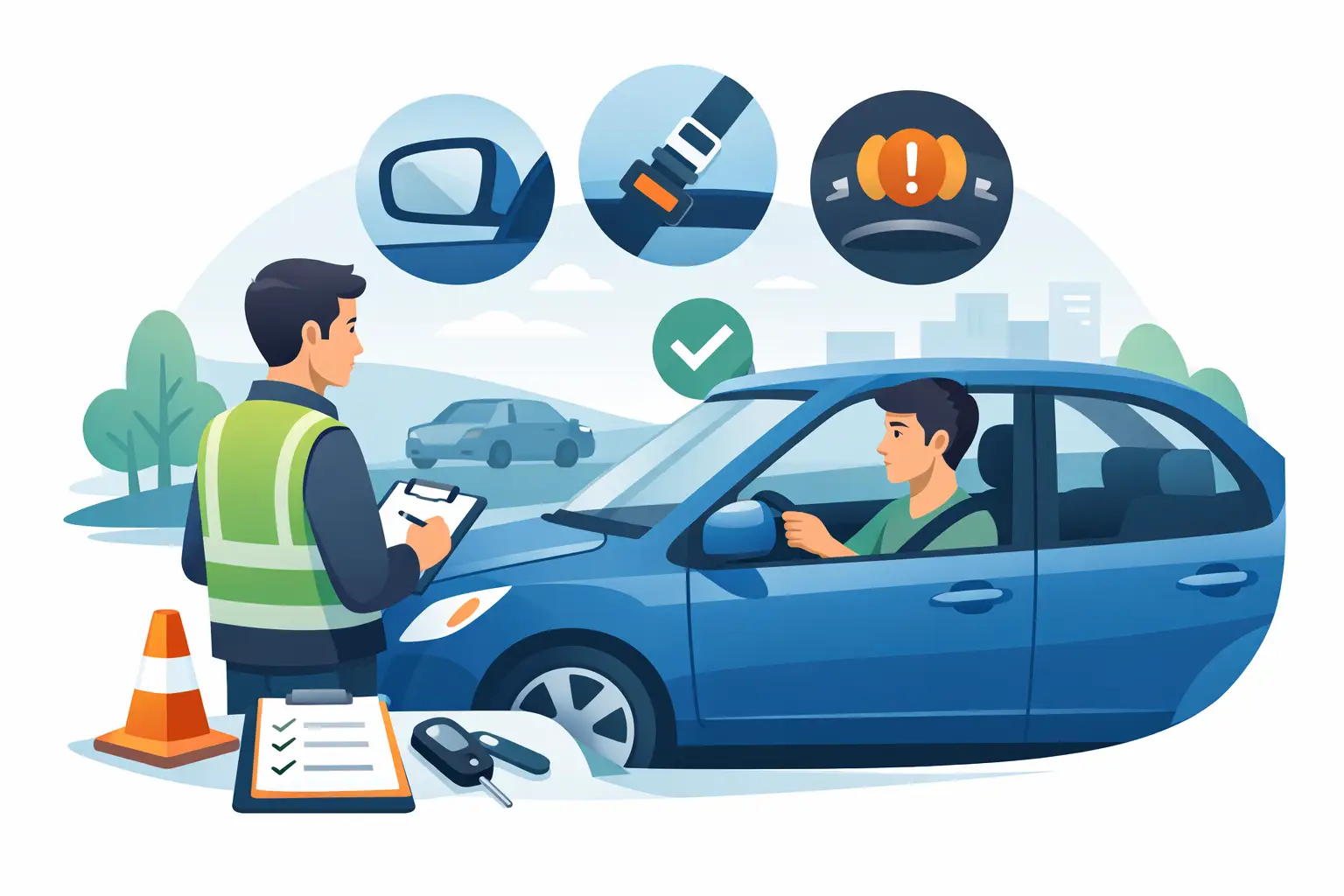
A VicRoads driving test pre drive check can feel like a small part of the appointment, but it sets the tone before you have even driven out of the parking space. When an examiner asks you to identify or operate a control, they are looking for calm familiarity with the vehicle and an awareness that safe driving starts before the wheels move.
The good news is that this is not a trick. You do not need to sound overly technical or memorize a long speech. You need to know the main controls in the car you are testing in, follow the examiner’s instruction carefully, and show that you can use each feature safely. A little focused practice can make this part of the test feel routine rather than stressful.
What the pre-drive check is assessing
Before the practical drive begins, the examiner may ask questions or give instructions related to the vehicle’s controls. The exact questions and sequence can vary, so avoid relying on a single rehearsed script from a friend or social media video. Your task is to listen, find the requested control, and operate it correctly when appropriate.
This check helps demonstrate that you can manage basic safety equipment without searching around while driving. For example, a driver who can quickly use the windshield wipers in rain, clear mist from the windshield, or activate hazard lights when needed is better prepared to respond to changing conditions on Melbourne roads.
It is also a chance to show good habits. Sit properly, adjust your mirrors and seat before moving, make sure your seat belt is on, and take a moment to understand the dashboard. There is no benefit in rushing. A composed start tells the examiner that you are ready to make safe decisions.
VicRoads driving test pre drive check controls to know
Every vehicle is slightly different. Indicator stalks may be on different sides, headlight switches may be on the stalk or dashboard, and the demister controls can look unfamiliar in a newer car. That is why practicing in the same vehicle you plan to use for your test is helpful.
You should be able to locate and explain the purpose of the common controls below. Do this while the car is safely parked, with your instructor guiding you if you are unsure.
- Turn signals and hazard lights: Know how to activate left and right signals, cancel them, and turn on hazard lights. Hazards are for warning other road users of a temporary hazard, not for ordinary stopping or parking.
- Headlights and high beams: Understand the difference between low beams, high beams, and parking lights if your vehicle has separate settings. You should also know where the high-beam indicator appears on the dashboard.
- Windshield wipers and washers: Be able to use intermittent and continuous wipers, adjust their speed if available, and operate the washer. This matters when rain, spray, dust, or glare reduces visibility.
- Front and rear demisters: Learn which symbol clears the front windshield and which clears the rear window. The front control usually directs air toward the windshield, while the rear demister often uses a rectangular window symbol with upward lines.
- Horn, parking brake, and dashboard warning lights: Know where the horn is, how the parking brake works in your car, and what key warning lights can mean. You are not expected to diagnose every mechanical issue, but you should recognize that a red warning light may require attention before driving.
If the examiner asks you to show a control, do not guess wildly. Take a brief second to look at the symbols. If you genuinely do not understand the instruction, it is better to politely ask for it to be repeated than to operate the wrong feature.
Use simple, safe answers
Many learners worry that their wording will be judged. Usually, clear and accurate is better than complicated. If asked about the rear demister, you could say, “This clears condensation from the rear window so I can see behind me.” If asked about hazard lights, you might explain that they warn other drivers when there is a hazard or emergency situation.
Keep your answer connected to safety. For headlights, the useful point is visibility: helping you see and helping others see your vehicle. For wipers and washers, the useful point is keeping the windshield clear. For the horn, explain that it is used to warn other road users of a potential danger, not to show frustration.
Avoid touching controls unnecessarily while you are explaining them. If the examiner asks you to identify a button, point to it or operate it only when requested. Follow their directions first, even if your instructor taught you a different order during practice.
The checks you should complete before moving off
The formal pre-drive questions are only one part of being prepared. Once you are in the driver’s seat, your setup should support safe observation and vehicle control throughout the test.
Start by adjusting the seat so you can fully press the brake pedal and comfortably hold the steering wheel. Set the mirrors so you can see behind and to each side without leaning. Put on your seat belt, check that doors are closed, and make sure loose items are not rolling around the cabin.
Then take a quiet look at the dashboard. Confirm the parking brake is applied if you are parked, notice the fuel level, and check for any warning lights that need attention. If you are using your own car, make sure it is roadworthy, clean enough for clear visibility, and fitted with functioning lights, signals, wipers, tires, and seat belts before test day.
A test vehicle that is unfamiliar or poorly maintained creates unnecessary pressure. If you are borrowing a family car, spend time learning its controls well before your appointment. Do not wait until the examiner is standing beside you to find out how the rear demister or headlights work.
Common mistakes that are easy to prevent
The most common issue is not a lack of driving ability. It is panic. Learners may know exactly where a control is during a lesson, then freeze because they feel watched. The best response is to slow your breathing, listen to the whole instruction, and complete one action at a time.
Another mistake is looking down at the controls for too long. During the parked pre-drive check, it is fine to locate buttons carefully. Once driving begins, prolonged attention inside the car takes your focus away from the road. Build familiarity beforehand so controls become easy to find by touch or with a quick glance.
International license holders may also need extra practice with local terminology. For instance, you may know a control as a handbrake rather than a parking brake, or a windscreen heater rather than a demister. The function is what matters, but practicing the terms used in Victorian lessons and tests can help you understand instructions immediately.
Finally, do not treat the pre-drive check as separate from the rest of the test. It connects directly to your driving. If rain starts, you need to use wipers without losing concentration. If your windows fog up, you need to clear them safely. Vehicle knowledge supports confident decisions on the road.
Practice in the vehicle you will drive
A short pre-test lesson is valuable because it lets you practice the check in a realistic setting. At Green Signals Driving School, learners can become familiar with modern dual-control automatic vehicles while receiving patient guidance on vehicle controls, Victorian road rules, and local test conditions.
For a new learner, five to ten lessons may be appropriate to build core skills and confidence. If you are already driving independently or converting an overseas license, three to five focused lessons may be enough to refine your observations, control use, and test preparation. The right amount depends on your experience, comfort level, and how well you know the vehicle.
Ask your instructor to run a pre-drive check exactly as an examiner might. Practice identifying controls without prompts, explain why each one matters, and repeat the process until it feels calm. This is especially useful before a test in Ringwood or another Melbourne eastern suburbs location where you want to begin the drive feeling settled.
On test day, give yourself time to arrive, park safely, and get comfortable in the vehicle. Your pre-drive check is your first opportunity to show that you are prepared. Treat it as a familiar safety routine, take each instruction carefully, and let that calm preparation carry with you onto the road.