

Parallel Parking Driving Lesson Melbourne Tips
Uncategorized | 2 August, 2026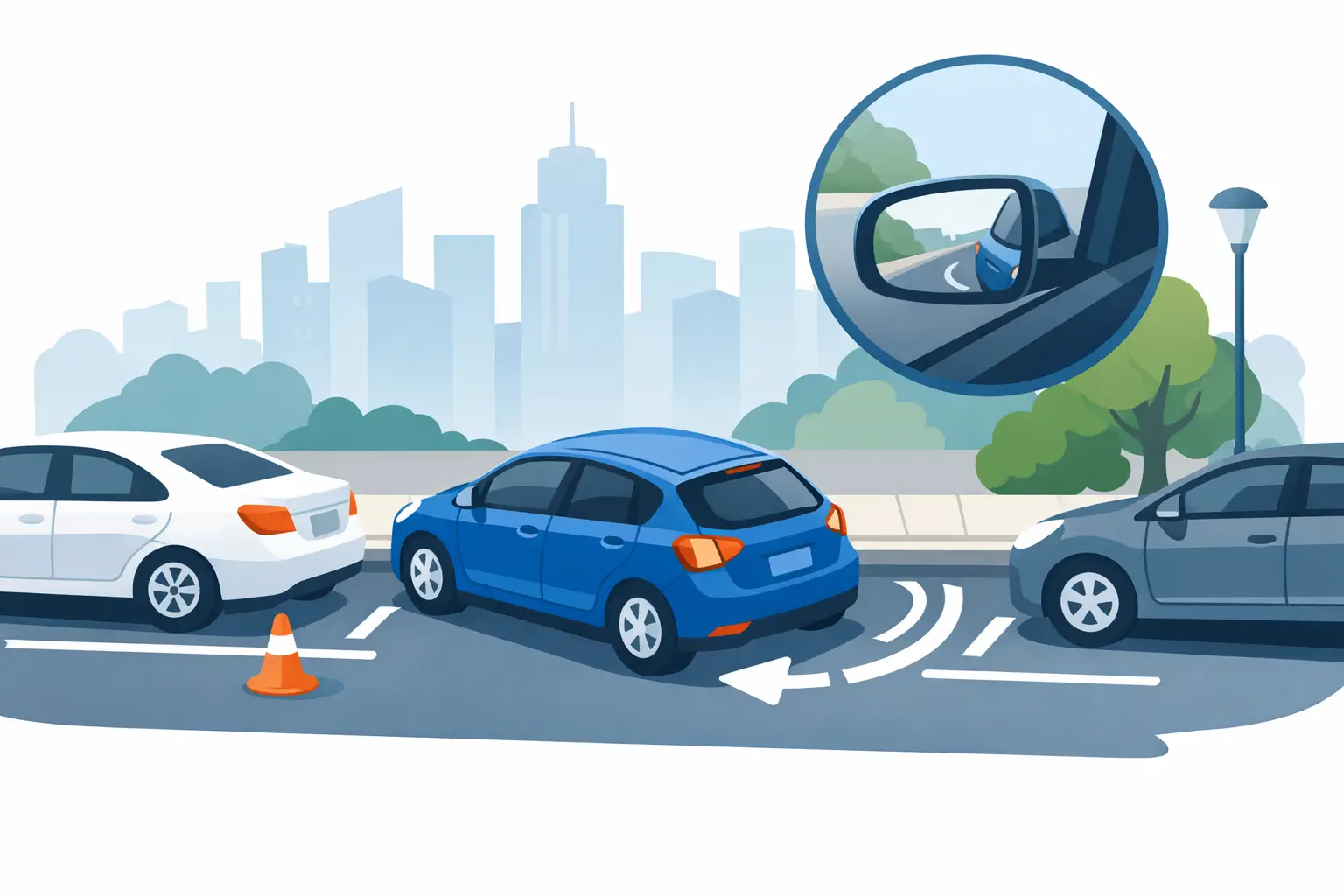
A tight parking space on a busy Melbourne street can make even a confident learner tense up. A parallel parking driving lesson Melbourne students can rely on should make the maneuver feel clear and repeatable, not like a last-minute test trick. With patient practice, safe observation habits, and guidance that suits your pace, parallel parking becomes one more controlled part of everyday driving.
For learners preparing for a VicRoads license test, this skill matters because it shows more than whether you can fit a car into a space. It shows your ability to observe traffic, judge distance, steer smoothly, control speed, and stay calm when other road users are nearby.
Why parallel parking makes learners nervous
Parallel parking asks you to manage several tasks at once. You need to choose a suitable space, check mirrors, signal, look for cyclists and pedestrians, reverse slowly, steer accurately, and finish safely without touching the curb. It is understandable that learners can feel rushed, especially when a car is waiting behind them.
The good news is that you are not expected to park quickly. In a driving test and in real life, safe, controlled decision-making matters far more than speed. A short pause to complete your observations is better than moving before you are ready.
International drivers may find the maneuver challenging for another reason. Road layouts, parking rules, vehicle size, and the expectation to drive on the left can all be different from what they know. A focused lesson helps turn those differences into familiar routines before test day.
What happens in a parallel parking driving lesson in Melbourne
A practical lesson starts well before you reverse into a space. Your instructor will first make sure you are comfortable with low-speed control, steering, mirror use, signaling, and checking blind spots. These are the building blocks of a safe parking maneuver.
You will then practice identifying spaces that are realistic for your current skill level. A suitable space should leave enough room to enter and exit without forcing the car in or placing other road users at risk. Early practice may happen in quieter streets where you have time to understand the sequence without pressure. As your confidence improves, you can work in more typical local traffic conditions.
Your instructor will explain a reliable reference-point method using the training vehicle. Reference points can help you understand when to begin turning and when to straighten the wheels. They are useful learning tools, but they are not a substitute for observation. Every parking space is slightly different, so you also need to judge the curb, the parked cars, and the room around you.
At Green Signals Driving School, lessons are delivered in modern automatic dual-control vehicles, allowing you to focus on road position, observations, and steering while your instructor supports safety when needed. That can be particularly reassuring when you are practicing close to parked cars for the first time.
A safe method to practice
Your instructor may adapt the order slightly to suit the street and vehicle, but the safety principles remain the same.
Set up with space and clear communication
As you approach the space, check your mirrors and signal early enough to let other drivers know your intention. Position your car alongside the vehicle in front of the space, leaving a sensible side gap. Stop only when it is safe and avoid blocking moving traffic longer than necessary.
Before reversing, check your mirrors and blind spots carefully. Look for pedestrians stepping off the curb, cyclists filtering through traffic, and vehicles approaching from behind. In Melbourne’s busy suburban streets, these checks are not optional. They are part of safe driving every time you park.
Reverse slowly enough to think
Low speed gives you time to observe, steer, and correct your position. Keep scanning rather than staring at one mirror or one point on the curb. Use rear and side vision together, and turn your head when needed to maintain awareness of what is happening around the car.
You will usually reverse in a controlled curve toward the curb, then steer the other way to bring the front of the vehicle into the space. The exact timing depends on the length of the space, the cars around you, and your starting position. A patient instructor will help you understand why each steering movement happens instead of asking you to memorize an unexplained sequence.
Finish neatly, but do not chase perfection
Once the vehicle is safely parked, straighten the wheels where appropriate and check that you are positioned close enough to the curb without touching it. Leave reasonable room from the vehicles in front and behind. If you are not happy with the position and conditions allow, it is often safer to pull out and reset than make a rushed adjustment.
A perfect-looking result is not the only goal. Your parking should be legal, controlled, and safe. A slight correction completed with good observation is far better than forcing the vehicle into a space.
Common mistakes and how to correct them
Turning too early is one of the most common issues. It can leave the rear wheel too close to the curb or put the car at an awkward angle. Turning too late can leave too much space from the curb or bring the front of the car close to the vehicle ahead. Both improve quickly when you practice in the same vehicle with clear guidance about your positioning.
Another common mistake is focusing so hard on the parked cars that you forget traffic behind you. Signals, mirror checks, blind-spot checks, and a slow speed help make your intentions predictable. If another driver becomes impatient, do not let their behavior pressure you into skipping safety checks.
Learners also sometimes steer while the car is moving too quickly. Automatic vehicles can creep faster than expected, particularly on a slope. Learning gentle brake control is essential. Slow movement gives you more time to make calm choices and reduces the chance of a curb strike.
Finally, some students believe they have failed the moment they need an adjustment. That mindset creates unnecessary anxiety. In a VicRoads test, assessors look at the overall safety and control of your driving. Your instructor can explain what is allowed, what may lead to an error, and when a reset is the safest option.
Practice for the VicRoads test and daily driving
Parallel parking may be assessed during a VicRoads license test, so it is wise to practice it as part of broader test preparation. Your lesson should also cover the routes, intersections, lane changes, speed management, and hazard awareness that affect your test performance in areas such as Ringwood, Blackburn, Nunawading, Vermont, Box Hill, Mitcham, and Glen Waverley.
For a new learner, five to ten lessons can provide a solid foundation across parking, turns, intersections, and general road confidence. If you are already driving comfortably but need to refine parallel parking before a test, three to five targeted lessons may be enough. The right number depends on your previous experience, confidence level, and how consistently you can practice between lessons.
Overseas license holders often benefit from combining parking practice with Victorian road-rule coaching. For example, understanding safe gap selection, clear signaling, and observation expectations can be just as important as the final position of the car. A lesson in English, Hindi, or Gujarati can make instructions easier to understand and reduce the stress of preparing for a local test.
Build confidence one space at a time
The best way to improve at parallel parking is not to avoid it until the week before your test. Practice it gradually, in appropriate spaces and with feedback that explains both what went well and what to change next time. Confidence comes from repeating safe habits, not from hoping you find an easy parking spot on test day.
When you can approach a space, observe carefully, reverse slowly, and make a calm correction when needed, you are building a skill that will serve you long after your learner permit becomes a full license. Take the time to learn it properly, and even a busy curbside space can become a manageable part of your drive.