

Automatic Versus Manual Licensing Rules in Victoria
Uncategorized | 16 August, 2026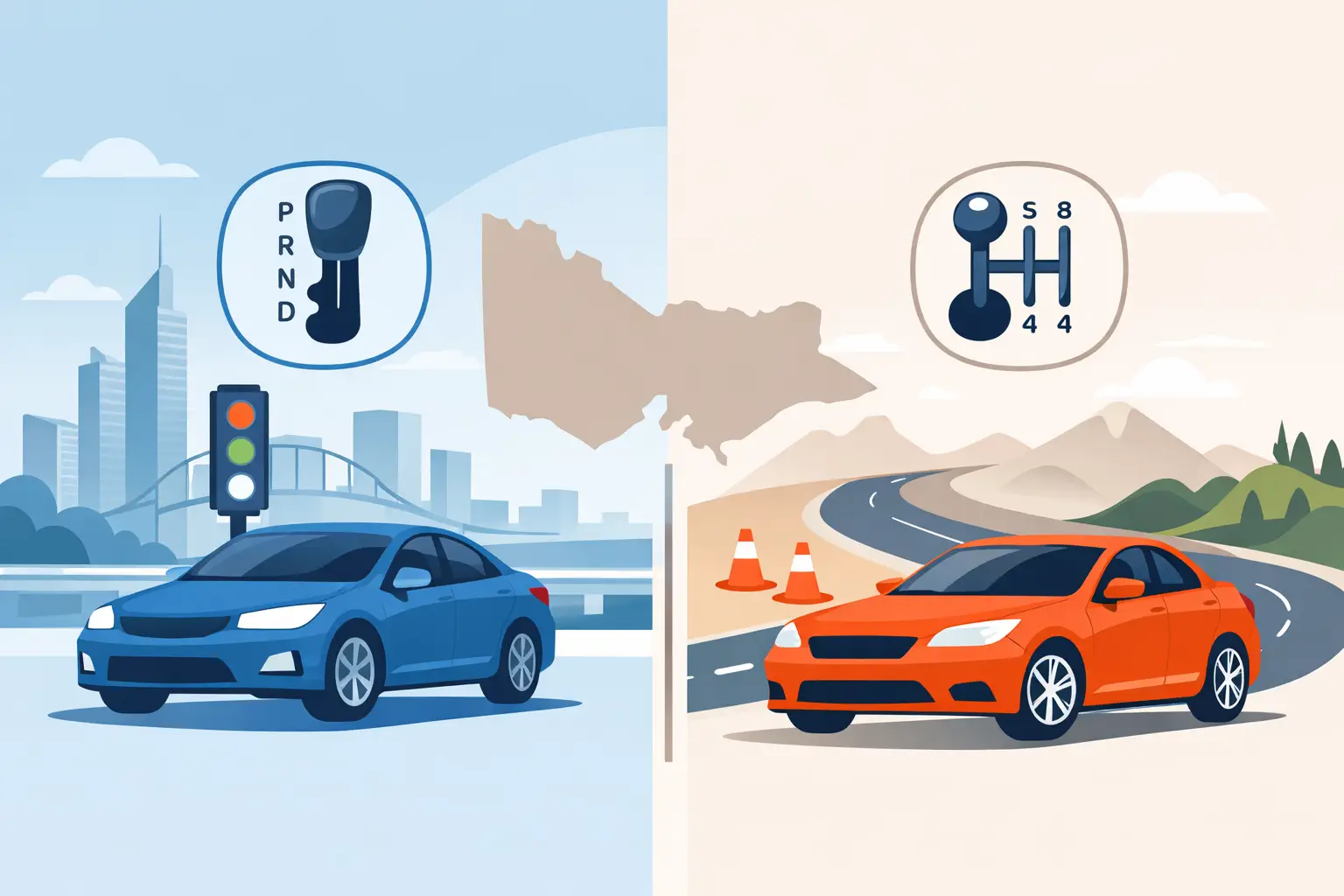
A driving test booking can feel like the final hurdle, but one decision made before the test can affect what you are allowed to drive afterward: the transmission of the car you use. Understanding automatic versus manual licensing rules helps Victorian learners, returning drivers, and overseas license holders choose lessons that suit their real-life driving needs, not just test day.
For many people in Melbourne’s eastern suburbs, an automatic is the comfortable and practical choice. It lets you focus on observation, road position, speed control, intersections, and the decisions that make driving safe. A manual license can offer broader vehicle choice, but it also requires confidence with clutch control and gear changes. Neither path is automatically better. The right one depends on your experience, your future vehicle, and how prepared you are to drive safely on Victorian roads.
What automatic versus manual licensing rules mean
In Victoria, the vehicle transmission used for your practical driving test can determine whether your license carries an automatic transmission condition. In simple terms, if you pass your test in an automatic vehicle, you are licensed to drive an automatic vehicle. You cannot then drive a manual vehicle unless you complete the required process to remove that restriction.
If you pass the practical test in a manual vehicle, you can generally drive both manual and automatic vehicles. This is why some learners consider testing in a manual car even when they expect to own an automatic.
However, broader permissions are only useful when they are supported by genuine skill. A manual test is not a shortcut to a more flexible license if clutch control, hill starts, gear selection, or low-speed maneuvering are still causing stress. During a drive test, the assessor is looking at your safe decisions and vehicle control together. Repeated stalling, rolling backward, or losing concentration while changing gears can affect your result.
Licensing requirements and conditions can change, and individual circumstances can differ. Always confirm the current rules that apply to your permit, license class, and test booking with VicRoads before making a final decision.
Why many learners choose an automatic test
Automatic vehicles are now common across private cars, family SUVs, rideshare fleets, and many newer vehicles. For a first-time learner, removing the clutch and gear lever can create more mental space to build the habits that matter every time you drive.
That includes checking mirrors before moving, choosing safe gaps, recognizing changing speed zones, managing roundabouts, scanning for pedestrians, and responding calmly when traffic is busy. These are the skills that help you pass a test and continue driving safely when an instructor is no longer beside you.
An automatic test may be the strongest option when you know your household car is automatic, you plan to purchase an automatic, or you need to get licensed without taking on an unnecessary extra challenge. It can also be a sensible choice for nervous drivers who have spent too much energy worrying about stalling rather than reading the road.
There is no prize for choosing the harder transmission. The best choice is the one that gives you the confidence and control to make safe decisions independently.
Automatic lessons can support faster skill development
A learner who is comfortable in an automatic can often spend more lesson time practicing the parts of driving that change from one suburb or route to another. In Ringwood, Box Hill, Blackburn, Nunawading, Vermont, Glen Waverley, and Mitcham, that might mean complex intersections, lane changes, school zones, busy shopping areas, or the local conditions around test routes.
For overseas license holders, automatic lessons can also make the transition easier. You may already be an experienced driver, but Victorian road rules, give-way expectations, speed management, and hazard awareness can still be unfamiliar. Reducing transmission workload may help you adapt more quickly and show your existing driving judgment clearly.
When a manual license may be worth the extra practice
A manual license can make sense if you expect to drive a manual car for work, share a manual vehicle with family, or want the flexibility to drive either transmission in the future. Some learners simply enjoy manual driving and feel confident coordinating the clutch, gears, braking, and observation.
The key question is not, “Can I make the car move?” It is, “Can I operate a manual car smoothly while staying fully aware of the road?” A test can include stopping and starting in traffic, turning at intersections, parking, and responding to situations you did not expect. Manual control must feel steady enough that it does not distract from safety.
Before choosing a manual test, practice until you can pull away smoothly, select appropriate gears without looking down, manage hill starts, and recover calmly if the engine stalls. One stall does not define you as a driver, but panic after a mistake can lead to more serious errors. A patient instructor can help you build the routine needed to reset safely and continue.
Can you change from automatic to manual later?
Yes, an automatic restriction does not have to be permanent. If you pass in an automatic now and later need manual driving privileges, you can complete the relevant VicRoads process in a manual vehicle. The exact steps depend on your license type and circumstances, so check the current requirements before booking.
For some people, this is the most practical sequence. They earn their license in an automatic vehicle, gain real-world road experience, then return for manual training when a job, vehicle, or family need makes it worthwhile. Others prefer to learn manual from the beginning because they know they will need it regularly.
It depends on timing, budget, access to a suitable vehicle, and confidence. What matters is making a clear decision rather than assuming an automatic license will prevent you from driving forever or that a manual test is required for everyone.
Choose lessons around your goal, not just the test
Your lesson plan should match the kind of driver you need to become. A brand-new learner may benefit from five to ten lessons to establish safe routines, while a confident learner preparing for a test may need three to five focused sessions. An overseas license holder may need targeted practice in Victorian road rules, local route conditions, and test expectations.
Start by telling your instructor whether you intend to test in an automatic or manual vehicle, what you expect to drive after licensing, and where you feel unsure. That allows lessons to focus on the right skills. For an automatic test, the priority may be observation, lane discipline, parking, and independent decision-making. For a manual test, those same skills still matter, with additional time for clutch control, gears, and hill starts.
At Green Signals Driving School, automatic lessons are delivered in modern dual-control vehicles so learners can practice with support while developing independent judgment. A calm instructor, a safety-equipped car, and clear feedback can make a big difference when test nerves begin to build.
A simple way to decide
Choose an automatic test if an automatic is what you will realistically drive, you want to concentrate on road awareness, or you need a more comfortable path toward safe independent driving. Choose a manual test if you have a genuine need for manual vehicle access and enough practice for vehicle operation to feel natural under pressure.
Do not let friends, family, or old assumptions make the decision for you. Automatic versus manual licensing rules are about the type of vehicle you may drive, but your license is also about responsibility. Choose the path that lets you leave the test center feeling capable, alert, and ready for the roads ahead.