
How to Use Hook Turns Safely in Melbourne
Uncategorized | 11 September, 2026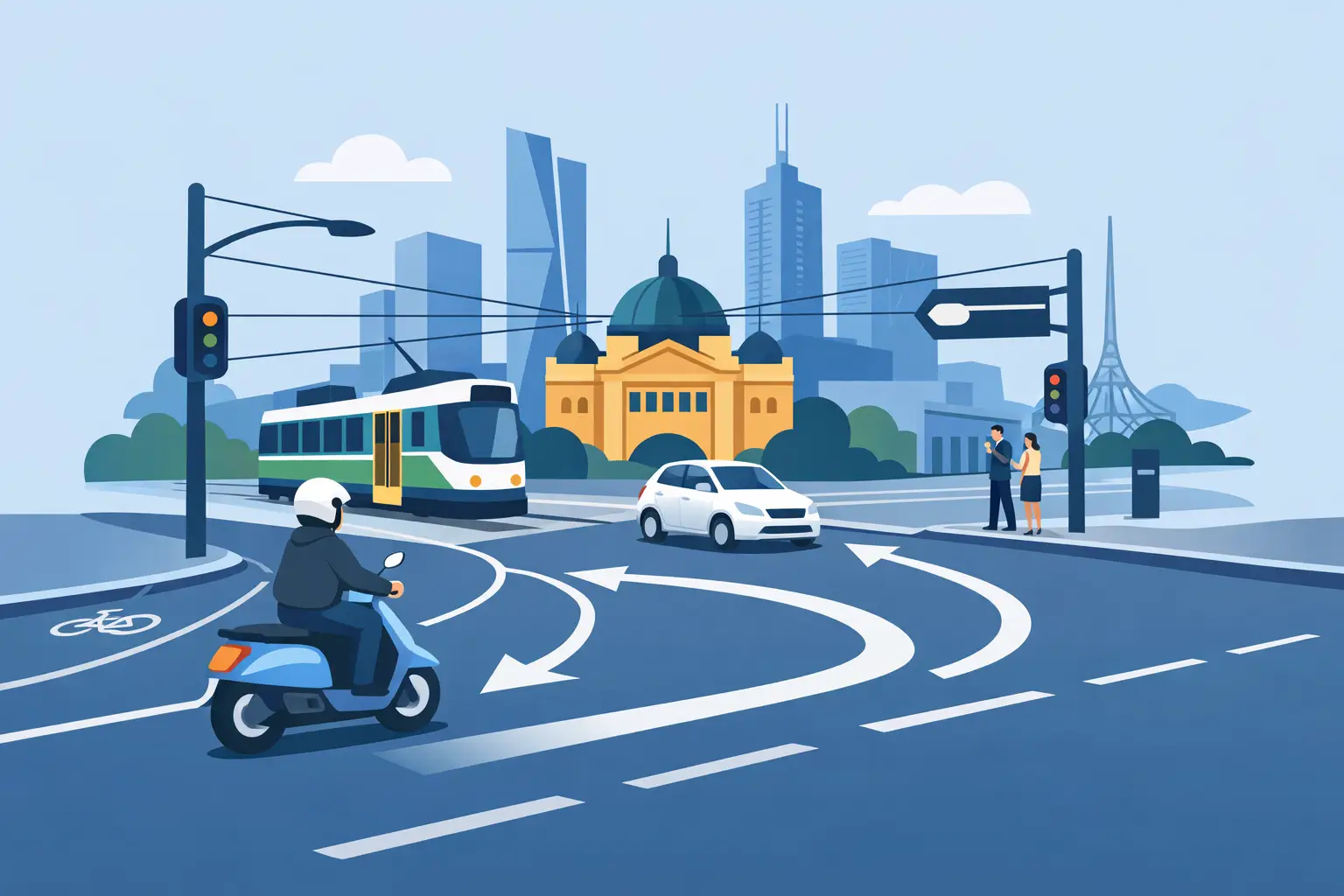
A hook turn can feel unfamiliar the first time you see one. You may be in the far-left lane, signaling right, while trams, cars, cyclists, and pedestrians all seem to be moving around you. Learning how to use hook turns calmly is especially valuable for Melbourne learners and overseas license holders, because the correct method is different from an ordinary right turn.
A hook turn is not a trick or a shortcut. It is a controlled way of turning right from the left side of the intersection, designed to keep traffic moving around busy tram routes. Once you understand the sequence and practice it with a patient instructor, it becomes a clear routine rather than something to fear.
What is a hook turn?
A hook turn is a right turn completed in two stages. Instead of waiting in the right lane to turn across traffic, you approach and enter the intersection from the far-left lane. You then wait inside the intersection until the traffic lights for the road you are entering turn green. At that point, you complete the right turn.
In Melbourne, hook turns are most commonly found in the CBD and at selected intersections with tram tracks. Signs and road markings tell you where they apply. If a sign says that right turns must be made by hook turn, you must follow that instruction. Do not make a conventional right turn from the right lane at a signed hook-turn intersection.
For learner drivers, the main challenge is that the car initially moves forward while the intention is to turn right. That can feel backward. The key is to trust the steps, keep your observation active, and avoid rushing because another driver is waiting behind you.
How to use hook turns step by step
The safest way to approach a hook turn is to prepare early. Look well ahead for hook-turn signs, lane arrows, traffic lights, tram tracks, and pedestrians. Late lane changes create unnecessary pressure, especially in busy city traffic.
1. Move into the far-left lane
When you see a hook-turn sign and need to turn right, position your vehicle in the far-left lane unless road markings or signs direct you differently. Check your mirrors, signal right, and make sure it is safe before changing lanes.
It may seem strange to signal right while driving in the left lane, but that signal communicates your intended turn to other road users. Keep the right signal on as you approach and enter the intersection.
Watch carefully for cyclists traveling along the left side of the lane. Give them room and never move across their path suddenly. If traffic is heavy, reduce speed smoothly and be ready to stop rather than forcing your way into position.
2. Enter the intersection on a green light
When your traffic light is green, drive into the intersection from the far-left lane. Move forward carefully and position the vehicle as far left as practical, while staying clear of the pedestrian crossing and allowing space for other vehicles that may also be performing a hook turn.
Do not enter the intersection if your light is red. Also avoid entering if congestion means you will be unable to clear the intersection safely. A green light is permission to proceed only when the space ahead is available.
As you move forward, keep scanning. Pedestrians may be crossing, cyclists may be alongside you, and trams may be approaching. In the city, good observation matters just as much as knowing the road rule.
3. Wait in the correct position
Once inside the intersection, stop and wait. Your vehicle should be positioned ahead of the pedestrian crossing and close to the left side, without blocking other traffic. Keep your wheels straight until you begin the turn.
This waiting phase is where many new drivers become anxious. You may see vehicles traveling past you or hear a tram nearby. Stay still, keep checking your surroundings, and focus on the traffic lights for the road you will be entering.
If another vehicle is also making a hook turn, leave enough room for both vehicles to complete the maneuver safely. Do not assume the other driver understands the rule perfectly. Maintain space and be prepared for unexpected movement.
4. Turn when the new road gets a green light
Complete the turn when the traffic lights for the road you are entering turn green. This is the important cue. You are not waiting for the original lights to change back to green.
Before moving, check that pedestrians have cleared the crossing and that your path is safe. Then turn right smoothly into the correct lane on the new road. In most cases, this means entering the left lane unless lane markings or traffic conditions require another position.
Cancel your signal once the turn is complete, check your mirrors, and continue at a safe speed. Do not brake suddenly after the turn unless a hazard requires it.
Hook-turn safety around trams and pedestrians
Hook turns exist largely because Melbourne’s tram network shares road space with vehicles. That makes awareness essential. A tram may be approaching from behind or traveling through the intersection as you prepare to move. Never stop on tram tracks if you can avoid it, and never assume a tram can stop quickly for your vehicle.
Pedestrians also deserve your full attention. People may begin crossing as their signal changes, and some may still be finishing their crossing when you receive a green light. You must give them time and space. Passing through a crossing before it is clear can be dangerous and may affect your driving test result.
At busy intersections, avoid looking only at the lights. Use a steady visual routine: check ahead, scan mirrors, look for pedestrians and cyclists, then check the relevant signal again. This helps you make decisions without becoming overwhelmed.
Common hook-turn mistakes to avoid
The most common mistake is approaching from the right lane and attempting a normal right turn where a hook turn is required. Always read the signs early. Another mistake is waiting for the wrong lights. Remember that you turn when the lights facing the road you are entering turn green.
Some learners stop too far back, blocking the pedestrian crossing, while others enter too far into the intersection and leave little space for traffic. Aim for a calm, controlled position near the left side, beyond the crossing but not unnecessarily far forward.
Rushing is another problem. Drivers behind you may seem impatient, but their impatience does not change your responsibility to perform the maneuver safely. A controlled hook turn is better than a quick, uncertain one.
Finally, do not treat every Melbourne intersection as a hook-turn intersection. Only use a hook turn where signs or road markings require it. At other intersections, follow the usual rules for turning right.
How hook turns may be assessed on a VicRoads test
A driving test assessor is looking for safe decision-making, observation, lane discipline, signaling, and control. They do not expect you to be perfect on your first attempt at a complex city intersection, but they do expect you to follow signs and respond safely to traffic conditions.
If your test route includes a hook turn, show that you can prepare early. Move to the correct lane safely, use your right signal, enter only on green, position the car correctly, and wait for the proper signal before turning. Keep your speed smooth and your steering controlled.
If you are unsure whether a hook turn applies, look for the signs rather than guessing. During a test, it is better to make a safe legal choice than to rush into an incorrect maneuver. Your assessor is evaluating safe driving, not how quickly you can get through an intersection.
Practice builds confidence before test day
Hook turns are easier after you have practiced them in real traffic with clear guidance. A lesson can help you recognize the signs earlier, choose the correct lane without last-minute changes, and learn where to wait in the intersection. This is particularly helpful for international drivers who are adjusting to Victoria’s road rules and Melbourne’s tram environment.
At Green Signals Driving School, a qualified instructor can include hook-turn practice in a lesson plan suited to your experience and test goals. Practicing in a dual-control vehicle gives you time to build confidence while receiving calm, practical feedback.
The next time you approach a signed hook-turn intersection, slow down, look ahead, and follow the sequence one step at a time. Safe driving is not about feeling rushed by the road around you. It is about making the right decision when it matters.