

What Happens in Your First Driving Lesson?
Uncategorized | 14 August, 2026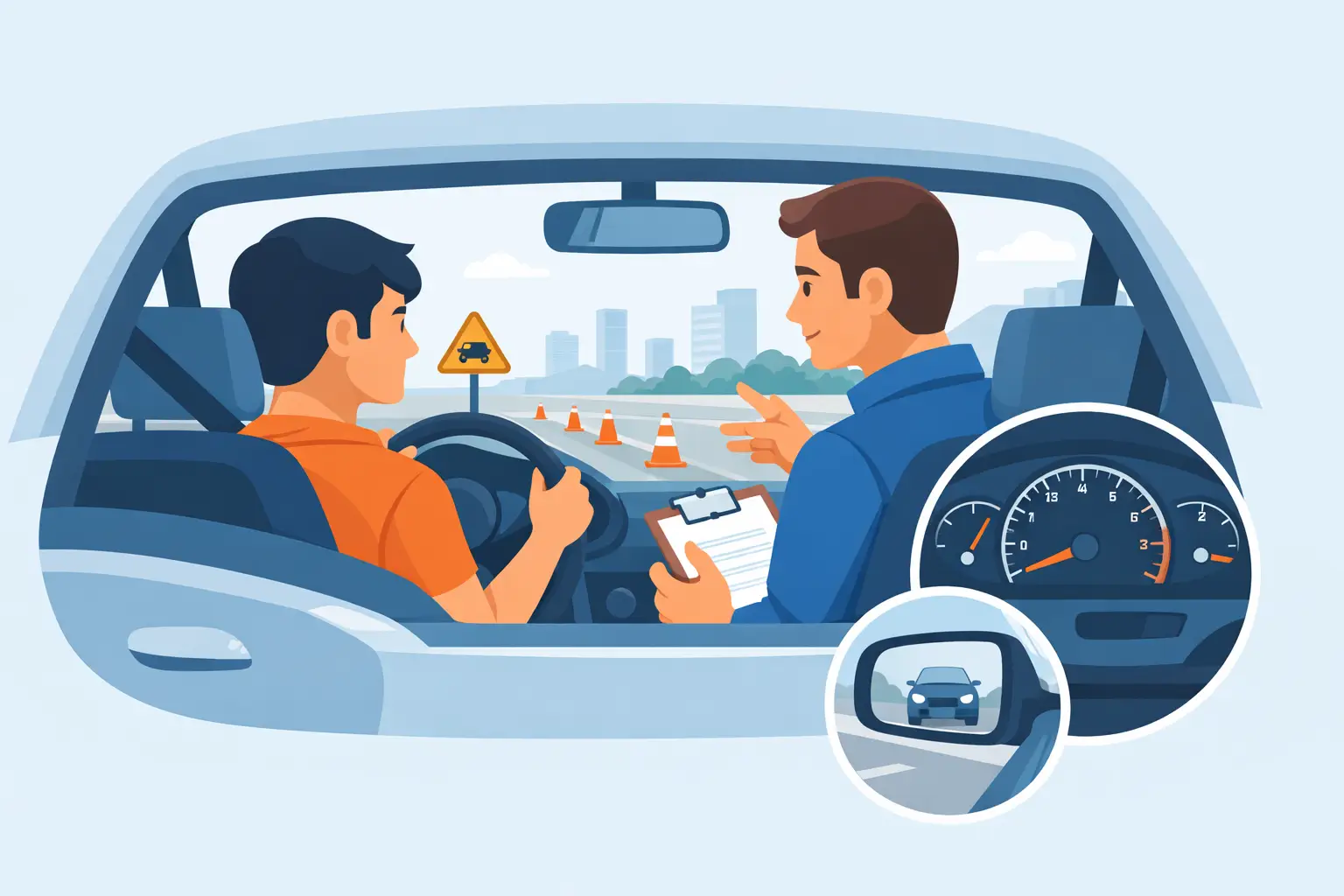
Your first driving lesson is not a surprise test. You will not be expected to handle busy traffic, complicated intersections, or every Victorian road rule in the first hour. If you have searched for “what happens in first driving lesson,” the simple answer is that it is a calm, structured introduction designed around your current confidence and experience.
For some learners, that means getting comfortable in the driver’s seat and moving off smoothly for the first time. For others, especially people with overseas driving experience, it may mean assessing existing skills and learning how Victorian road rules and local driving conditions differ. The pace should feel safe, clear, and manageable.
Before the Car Moves: Meeting Your Instructor
Your lesson usually begins with a short conversation. Your instructor will check that you have the right license or learner permit with you and ask about your driving background. Be honest here. There is no advantage in pretending to be more experienced than you are.
You may be asked whether you have driven with a parent or friend, whether you feel nervous, and what you want to achieve. Perhaps you want to build basic skills, prepare for a VicRoads test, or convert an international license. Your answers help shape the lesson plan.
At Green Signals Driving School, learners can choose a male or female instructor, with lessons available in English, Hindi, and Gujarati. Being able to understand instructions comfortably can make a real difference when you are learning something new and need to react safely.
Your instructor will also explain how the dual-control vehicle works. Modern training cars have an extra brake pedal for the instructor, so they can assist if needed. This does not mean they expect something to go wrong. It is a safety feature that lets you focus on learning without feeling alone in the car.
What Happens in a First Driving Lesson in the Driver’s Seat?
Before you drive, you will learn how to set up the car properly. This is a habit that should happen every time you get behind the wheel, not just during lessons or a driving test.
Your instructor will guide you through adjusting the seat so you can comfortably reach the pedals, setting the mirrors, checking your steering wheel position, and fastening your seat belt. You will also learn the location of the indicators, windscreen wipers, lights, hazard lights, gear selector, parking brake, and other essential controls.
For a learner in an automatic car, this is reassuringly straightforward. Your right foot operates both the accelerator and brake. Your instructor will explain why you should not use both feet, even if you have seen someone else do it. Using one foot helps prevent sudden braking or pressing the wrong pedal.
You will usually practice the basic sequence before moving:
- Check mirrors and surroundings.
- Select Drive while keeping your foot firmly on the brake.
- Release the parking brake if it is on.
- Signal if needed, look for hazards, and move away smoothly.
The goal is not speed. It is control. Smooth steering, gentle braking, and careful observation are far more valuable than trying to do too much too soon.
Your First Time Moving and Stopping
Many first lessons begin on quiet local streets or low-traffic areas. Your instructor chooses a location that matches your ability, rather than placing a new learner in a situation that feels overwhelming.
At first, you may simply practice moving forward, maintaining a steady road position, and stopping safely. You will learn how much pressure the accelerator and brake need, which often takes a few attempts. This is completely normal. Every vehicle feels slightly different, and developing pedal control comes through practice.
Your instructor may ask you to look well ahead instead of staring at the front of the car. New drivers often focus too closely on the road immediately ahead, which can lead to late reactions and uneven steering. Looking farther ahead helps you keep the vehicle straighter and notice changing conditions earlier.
You will also begin checking mirrors regularly. Mirror checks are not just something to perform for a test. They help you understand what is happening around your vehicle before you slow down, turn, change direction, or pull over.
If you make a mistake, your instructor will explain what happened and help you reset. Stalling is not an issue in an automatic car, but braking too firmly, turning too widely, or forgetting an indicator are common early errors. A patient lesson turns these moments into useful practice, not embarrassment.
Learning the Habits That Keep You Safe
A first driving lesson introduces the routines that support safe driving long after you pass your test. In Melbourne’s eastern suburbs, roads can quickly change from quiet residential streets to busy shopping areas, tram routes, school zones, and multilane intersections. Good habits give you time to respond calmly.
Your instructor will likely introduce the basic observation routine: check mirrors, signal when necessary, look for pedestrians and cyclists, and scan for approaching traffic. At intersections, you will learn to slow down early and identify who has right of way. You may not cover every type of intersection in the first lesson, but you will begin building the awareness needed for them.
Speed management is another early focus. Learners sometimes think driving slowly means driving safely, but the right speed depends on the posted limit, weather, traffic, visibility, and road conditions. A safe driver stays within the limit while adjusting to what is happening around them.
You may also discuss safe following distance. Keeping space behind the car in front gives you more time to brake smoothly if traffic stops. This becomes especially important in wet weather, near school zones, and on congested roads.
Will You Drive on Main Roads?
It depends on your confidence, previous experience, and how quickly you settle into the controls. A true beginner may remain on quiet streets for the whole lesson. That is not a sign that you are behind. It is often the best way to develop a solid foundation.
A learner who has already practiced with a supervising driver may move onto slightly busier roads, practice turning at intersections, or learn how to approach a roundabout. An overseas license holder with years of driving experience may spend more time on Victorian rules, lane positioning, hook turns where relevant, school zones, and local test expectations.
There is no benefit in rushing into difficult situations before you can manage the basics comfortably. Confidence grows when each new skill feels achievable.
How Feedback Works During the Lesson
Good driving instruction is clear and specific. Rather than hearing only “be careful,” you should be told what to do differently: begin braking earlier, check the left mirror before pulling over, or keep your hands steady through the turn.
Your instructor may give directions in advance, then talk through the steps as you complete them. Early on, this guidance can feel detailed. With practice, the routines become more natural and you will need fewer prompts.
Expect positive feedback as well. Knowing what you did correctly matters because it helps you repeat safe decisions. A calm instructor should never make you feel rushed for asking a question or needing to practice a maneuver again.
At the end of the lesson, you will usually discuss what went well, what needs more practice, and what to work on before the next session. If you are practicing with a family member or friend, this feedback gives you a useful focus instead of simply driving around without a plan.
What to Bring and How to Prepare
Bring your Victorian learner permit or the appropriate license documents if you are converting an overseas license. Wear comfortable shoes with a flat sole so you can feel the pedals properly. Avoid heavy boots, loose footwear, or high heels that can make pedal control harder.
Try to arrive a few minutes early and avoid booking your first lesson when you are extremely tired, rushed, or distracted. It is fine to feel nervous. Tell your instructor at the start. A good lesson plan can be adjusted, whether that means spending more time on quiet streets or reviewing controls before you begin.
You do not need to memorize every road rule before your first lesson. You do need a willingness to listen, ask questions, and practice steadily between lessons when possible.
What Comes After Your First Lesson?
Your first lesson gives you a starting point, not a final judgment of your driving ability. A novice learner may benefit from five to ten lessons alongside regular supervised practice. Someone who is already confident but wants help preparing for a VicRoads test may need three to five focused sessions. The right number depends on your current skills, how often you practice, and the areas that need attention.
The most helpful next step is to build on what felt challenging while the lesson is fresh. Practice smooth stopping, mirror checks, or quiet-street turns with a qualified supervisor if you can. Then return to your next lesson ready to add one new skill at a time. Safe driving is built through calm repetition, and every confident driver began with that first careful move away from the curb.